

Current Status
Not Enrolled
Enroll in this course to get access
Price
Free
Get Started
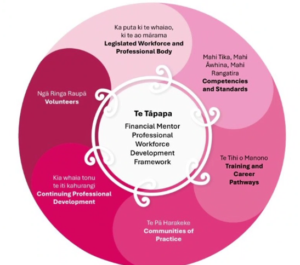
Description
A code of ethics is a set of principles and guidelines that help individuals and organisations navigate complex situations by defining acceptable behaviour and upholding core values like honesty, integrity, and respect. It provides a framework for making decisions, ensures accountability, and helps maintain trust with stakeholders, such as employees, clients, and the public. Different professions and organisations have specific codes that reflect their unique missions and the standards expected of their members. Our Code of Ethics is the second of three interconnected parts of Te Kawa Matua: Practice Standards for Financial Mentors in Aotearoa New Zealand. Each section has a distinct role in defining professional financial mentoring practice:- Professional Practice Standards – what we do
- Code of Ethics – why we do it
- Code of Conduct – how we do it.
Aim of Module
The aim of this module is for you to:- understand the Code of Ethics values; and
- understand and demonstrate the ethical principles.
Who is this module for?
All new financial mentors as part of completing their FMIC provisional period competencies. All existing financial mentors and service managers to extend their understanding of the Code of Ethics expectations.What will you learn?
At the completion of this module, you will have explored these topics and how they relate to the Code of Ethics:- The Code of Ethics Values
- Principle 1: Respect for People
- Principle 2: Empowerment and Self-determination
- Principle 3: Professional Competence and Integrity
- Principle 4: Confidentiality and Privacy
- Principle 5: Professional Boundaries
- Principle 6: Social Justice and Advocacy
- Ethical Decision-making Framework.
Module timeframe
It is expected that this course will take one to one and a half hours to complete.Course Content
Introduction
You don't currently have access to this content
Whakataukī
You don't currently have access to this content
Our Values – Ngā Uara
You don't currently have access to this content
Ethical Decision-Making Framework
You don't currently have access to this content
Module Summary
You don't currently have access to this content
FinCap
Instructor
55 Courses
FinCap offers support to all budgeting and financial capability services in New Zealand, providing them with all the resources they need to help clients safely & confidentially.